
Discovering Turkish Flavours in the Okanagan
Sometimes, exploring a new culture does not require travelling thousands of kilometres. It can begin with a visit to a little café in your own city. During one of my morning Knox mountain hike in Kelowna, I decided to try two traditional Turkish favourites: Turkish tea, known as çay, and a pastry called börek for my breakfast. It was a lovely opportunity to experience something different through food. From the way the tea was served to the layers of pastry, everything had a story behind it. I particularly enjoyed discovering how a simple cup of tea and a piece of pastry could introduce me to the food traditions of a country I have never visited.

Turkish tea is much more than an ordinary beverage in Türkiye. It is an important part of everyday life, hospitality and social gatherings. Most traditional Turkish tea is made using black tea leaves, particularly those grown in the Rize region along the eastern Black Sea coast. The tea is traditionally prepared in a special double kettle called a çaydanlık. The upper pot holds concentrated tea, while the lower pot contains boiling water. This allows people to adjust the strength of their tea according to their preference. It is usually served in small, delicate, tulip-shaped glasses without milk, sometimes accompanied by sugar. Interestingly, tea cultivation became firmly established in Türkiye during the early twentieth century, and the region of Rize became the heart of its tea industry. Today, offering someone tea is considered a gesture of friendship and hospitality.

Photo credit-goturkiye.com
The second attraction was börek, a traditional savoury pastry with a long history in Turkish and Ottoman cuisine. It is made using thin sheets of dough, commonly called yufka, or filo-style pastry. These delicate layers are filled with different ingredients before being folded, rolled or arranged in trays and baked until golden and crisp. Popular fillings include white cheese, spinach, minced meat, potatoes, parsley and onions. Some varieties combine cheese and herbs, creating a delicious contrast between the flaky outer layers and the soft, savoury filling. Börek has been part of the culinary traditions of the former Ottoman world for centuries, with different regions developing their own shapes, fillings and cooking techniques. It is enjoyed as breakfast, a snack or even a complete meal.

The café offers a variety of traditional Turkish delicacies, including different types of börek, gözleme, cheese and sucuk toast, and Turkish breakfast dishes such as menemen. Its menu also features fresh salads, lentil soup and other savoury options. For dessert, you can enjoy several varieties of baklava, kadaifi, rice pudding, revani and trilece, along with traditional Turkish tea.

What I found particularly interesting was how these two foods complemented each other. The warm, savoury pastry paired beautifully with the hot black tea. The crisp layers of börek offered a different texture from its soft filling, while the tea provided a refreshing contrast. In Turkish culture, tea is often enjoyed alongside pastries, breads and other small dishes, making it an important part of the dining experience. It is not necessarily about having a large meal, sometimes it is about sitting down, enjoying something delicious and taking time to appreciate the moment. I found it fascinating how food traditions can bring together history, agriculture, craftsmanship and everyday social life.

For dessert, I got the pista baklawa, a pastry with layers and filling of crushed pista. Although baklava is sometimes mistakenly associated with Dubai, its roots are generally traced to the Ottoman Empire, particularly the culinary traditions of present-day Türkiye. It became a celebrated Ottoman dessert and spread across the Middle East and Mediterranean through centuries of cultural exchange. All the food was served with cucumbers and tomato.
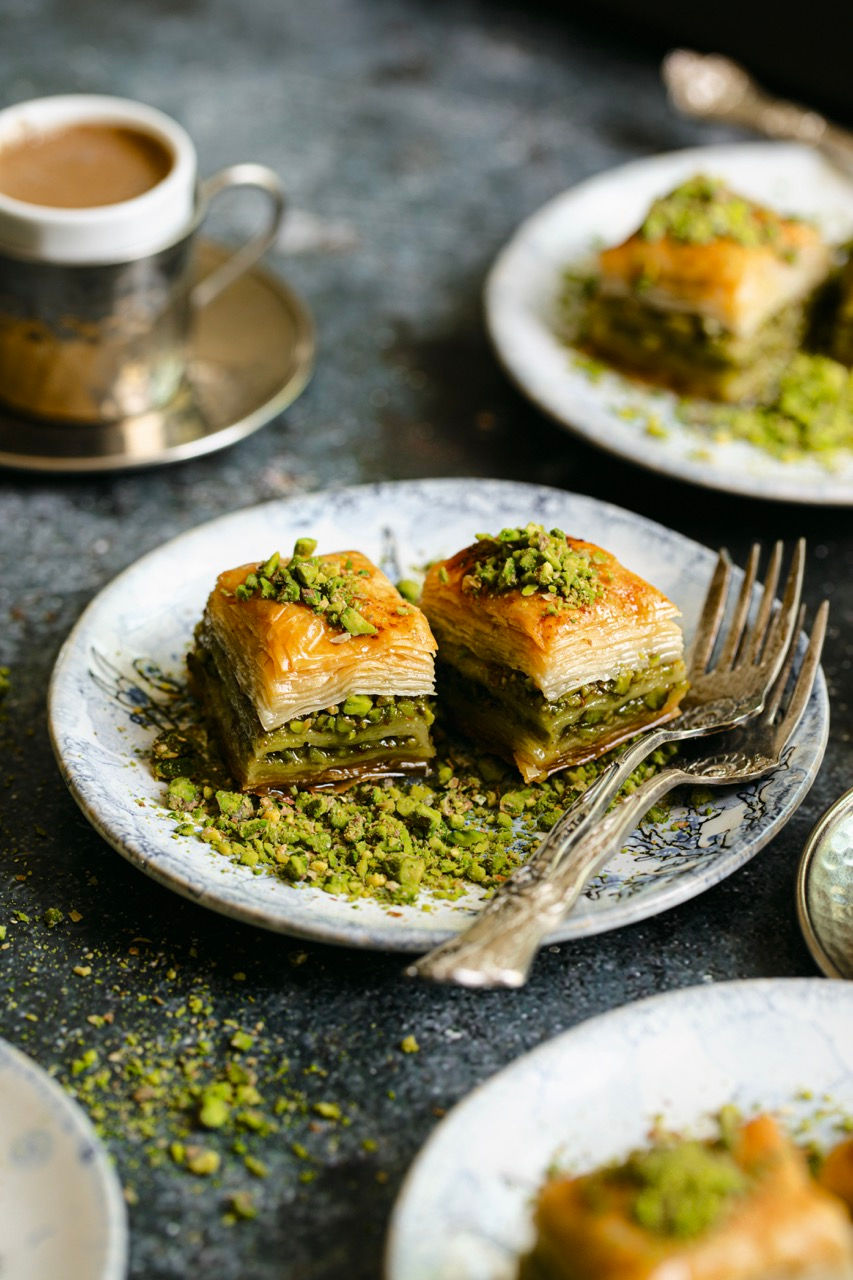
Photo credit-cherrybombe.com
My little Turkish food experience in Kelowna reminded me that one of the best ways to explore the world is through its food. Every cuisine carries stories of geography, climate, agriculture, migration and generations of family traditions. A cup of tea can tell us about the tea gardens of Rize, while a flaky pastry can take us back to the kitchens of the Ottoman era. Although I was sitting in a café in British Columbia, for a little while I was exploring a different part of the world through its flavours. Perhaps that is the beauty of food: it allows us to travel, learn and experience cultures without ever leaving our city.
Until next time stay tuned to know more about world cuisines.
Comments