
Halloween: Spookiest Night of the Year
Every year, as October comes to an end and autumn leaves cover the streets, something unusual begins to happen. Houses are decorated with glowing pumpkins, skeletons hang from doorways, spider webs appear in gardens, and people dress up as witches, ghosts, vampires and all kinds of mysterious characters. Children walk from house to house collecting candies, while families gather for pumpkin carving, haunted attractions and spooky movie nights. This celebration is known as Halloween, observed every year on October 31. Although today it is associated with costumes, candy and entertainment, its origins go much deeper than a night of fun and fright. Halloween is a festival shaped by ancient beliefs, seasonal traditions and centuries of cultural change.
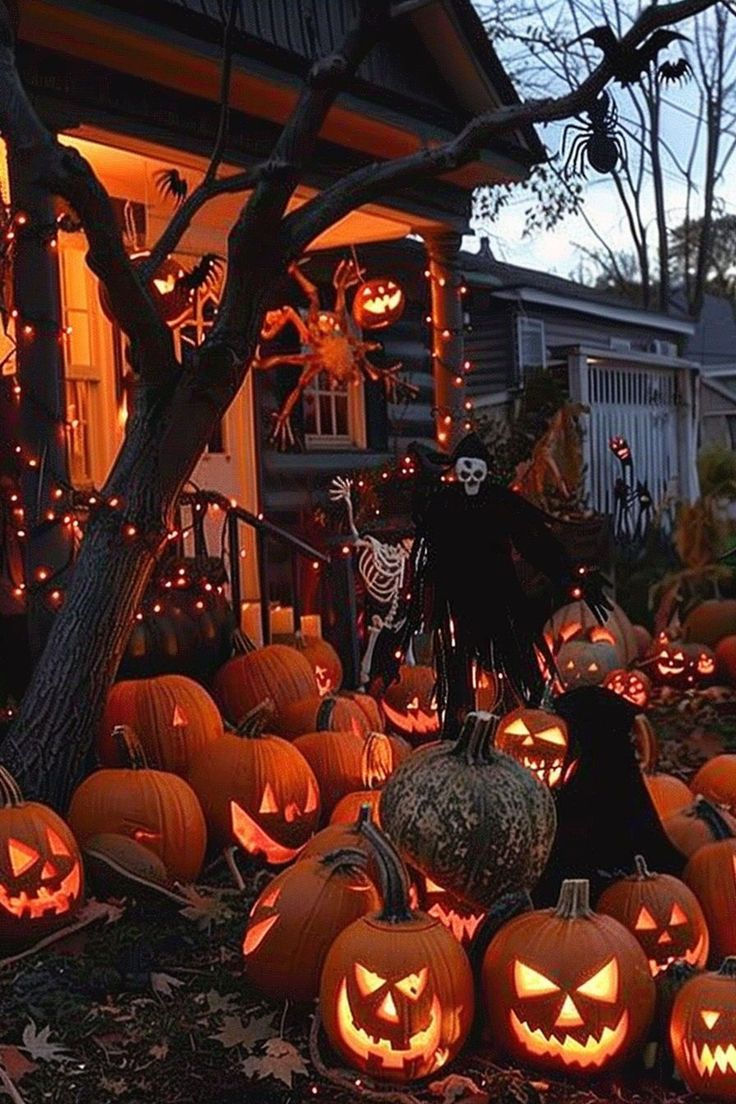
Photo credit-in.pinterest.com
The word Halloween comes from All Hallow's Eve, meaning the evening before All Saint's Day, a Christian festival observed on November 1 to honour saints and martyrs. However, the roots of Halloween go back more than 2,000 years to an ancient Celtic festival called Samhain, celebrated in regions that are now Ireland, the United Kingdom and parts of France. For the Celts, November 1 marked the beginning of a new year and the transition from the warmer summer months to the darker, colder winter season. This change of seasons was particularly important for farming communities because it marked the end of the harvest and the beginning of winter preparations. Over time, the older Celtic traditions blended with Christian observances, eventually giving rise to the Halloween celebration we recognise today. Major cities celebrate Halloween by hosting Halloween parades, last year I had the chance to participate in Toronto's Halloween Parade. Individuals were dressed up as dead bride, bed bugs, zombies, and other mysterious characters.

Photo credit-dorset.ie
But why did people begin associating this particular night with ghosts and spirits? The ancient Celts believed that on October 31, the boundary between the world of the living and the dead became thinner, allowing spirits to return to Earth. Some spirits were believed to be harmless, while others could cause trouble or bring bad luck. To protect themselves, people gathered around large bonfires, offered food and performed rituals. They also wore animal skins and unusual disguises, hoping to confuse or frighten away wandering spirits. In some communities, food and offerings were left outside homes for supernatural visitors. These practices were not simply celebrations; they reflected people's understanding of nature, death, the changing seasons and the unknown. It was a time when communities came together to prepare for winter and remember the mysterious connection between the living and the dead.

Traditions such as souling, in which people visited homes offering prayers for the dead in exchange for food, and guising, where people dressed in disguises and performed songs or tricks for treats, gradually developed. Irish and Scottish immigrants carried many of these customs to North America during the nineteenth century. There, they continued to evolve, and pumpkins gradually replaced turnips as the preferred vegetable for carving. The familiar jack-o'-lantern was born, becoming one of Halloween's most recognisable symbols.

Photo credit-carnegiemnh.org
Today, Halloween has transformed into a colourful celebration enjoyed by children and adults alike. One of its most popular traditions is trick-or-treating, where children dress up in costumes and visit neighbouring houses asking for candies and chocolates. Families carve pumpkins, place glowing lights inside them and decorate their homes with witches, bats, skeletons, ghosts and other spooky characters. Haunted houses, corn mazes, costume competitions, themed parties and horror movie marathons have also become part of the festivities. Even pets get dressed up in tiny costumes! In countries such as Canada and the United States, shops begin displaying Halloween decorations weeks in advance, and entire neighbourhoods participate in creating elaborate displays. What once involved bonfires and protective rituals has now become an opportunity for creativity, entertainment and community participation.

Interestingly, celebrations around this time of year are not limited to Halloween. In Mexico, Día de los Muertos, or the Day of the Dead, is observed on November 1 and 2. Families honour deceased loved ones by creating colourful altars decorated with photographs, candles, marigold flowers and favourite foods. While Halloween and the Day of the Dead have different histories and meanings, both reflect the human desire to remember and connect with those who have passed away.

From ancient Celtic bonfires to modern pumpkin-lit doorsteps, Halloween has travelled through centuries, adapting to changing cultures and generations. What began as a festival connected to the changing seasons and the spirit world has become a night of imagination, traditions and togetherness. Perhaps that is the magic of Halloween: for one evening every year, the ordinary world becomes a little mysterious, and everyone gets an excuse to step into a different character. The most interesting Halloween decorations that I came across in my neighbourhood was a house which decorated thier front yard by hanging a wrapped dead body from a tree and the skeleton holding its rope. They also had a pair of skeletons sitting on chair along with two dog skeletons. The blowing wind makes the body swing making it looks extremely scary during evenings.

Until next time, stay happy and healthy! Happy Halloween!

Comments