
The Greenland Shark: Ancient Deep-Sea Drifter
Hidden beneath the icy waters of the Arctic and North Atlantic, there lives a creature so elusive, so ancient, and so mysterious, it almost feels like a myth. Meet the Greenland shark—one of the most fascinating and misunderstood animals in the ocean.
Life in the Cold Lane
The Greenland shark (Somniosus microcephalus) is a slow-moving, deep-sea predator found in the cold waters near Greenland, Iceland, and parts of Canada and Norway. It can dive over 2,000 meters deep, making its home in some of the most inhospitable environments on Earth.

But the cold doesn’t bother this shark it thrives in it. Its body is specially adapted to low temperatures, with a unique cocktail of chemicals in its flesh that prevent it from freezing, even in icy waters. These same chemicals, however, make the meat toxic to humans unless specially treated.
The Longest-Living Vertebrate
If the Greenland shark had a dating profile, it might read: “Chill, patient, and very experienced.”
Scientists estimate that these sharks can live over 400 years, making them the longest-living vertebrates ever discovered. One female shark, measured in 2016, was believed to be around 392 years old born before the United States even existed!

Photo credit-divemagazine.com
How do they live so long? Their incredibly slow metabolism, cold-water lifestyle, and minimal exposure to predators might be the secret. They grow at a glacial pace just 1 cm per year which also means they don’t reach sexual maturity until around 150 years old!
Blind But Deadly
Interestingly, many Greenland sharks are partially blind, thanks to a parasite called Ommatokoita elongata that attaches to their eyes. Despite this, they are still capable hunters, relying on their other senses especially smell to locate prey.
Their diet includes fish, seals, and even carrion (like polar bears or reindeer that fall into the water). Because of their sluggish swimming style, scientists believe they often scavenge or ambush sleeping animals.
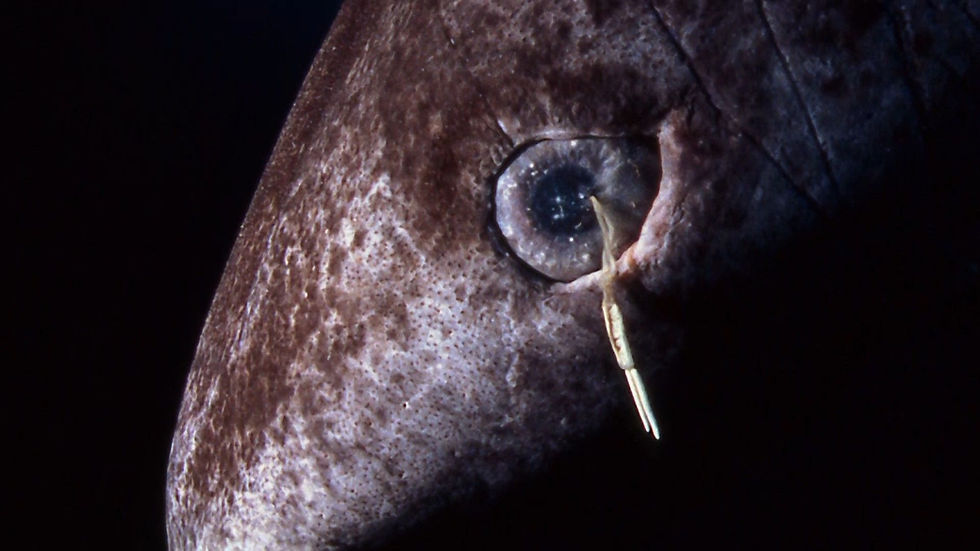
Photo credit-www.reddit.com
Mysterious and Misunderstood
Though these sharks can grow up to 7 meters (23 feet) long almost the size of a great white they are not aggressive to humans and are rarely seen. Much of what we know comes from deep-sea submersibles, fishing bycatch, and rare encounters.
They have been part of Inuit legends for centuries and are still considered a cultural icon in parts of Greenland and Iceland, where their meat is fermented and eaten as a delicacy called hákarl.

Photo credit-adventures.is
Why They Matter
Greenland sharks are a window into the past living time capsules that can help scientists understand aging, cold-environment adaptations, and deep-sea ecosystems. Yet, like many deep-sea species, they are vulnerable to overfishing and climate change.
Their slow reproduction and long lifespan make them particularly sensitive to environmental disturbances. If we want these living fossils to keep drifting through the deep, we need to protect them.
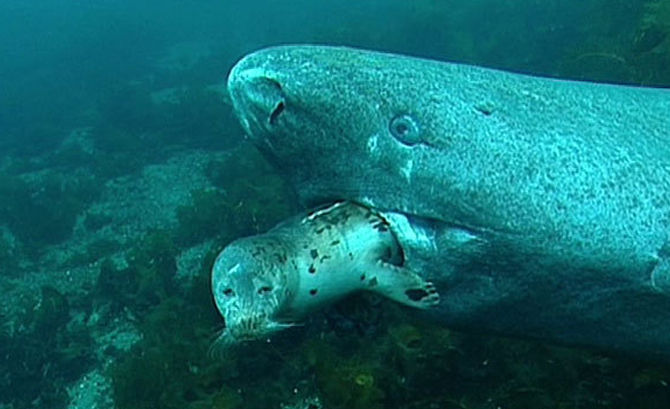
Photo credit-www.pasttime.org
Did You Know?
-Greenland sharks have been found with moose and horse remains in their stomachs.
-They smell awful—their flesh has a strong scent of urine due to urea buildup.
-In Inuit folklore, they were once thought to have magical powers due to their rarity and mysterious habits.
The Greenland shark may not be the fastest, flashiest, or fiercest but it’s undoubtedly one of the most awe-inspiring creatures in our oceans. As science continues to unlock its secrets, we are reminded that the deep sea still holds many wonders just waiting to be discovered.


Comments