
The Legendary 1953 Mt. Everest Climb
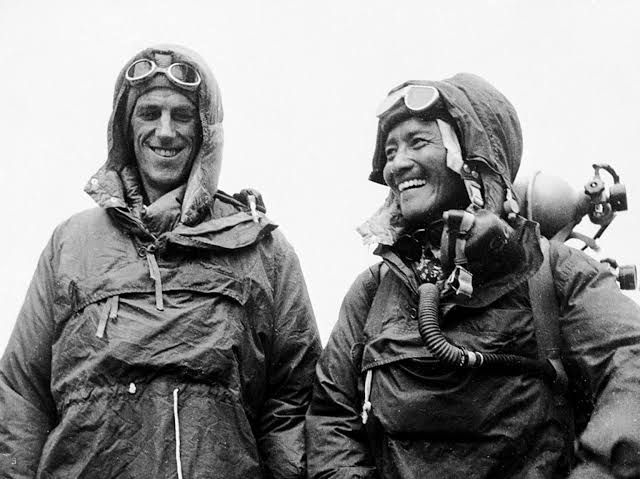
On May 29, 1953, at 11:30 a.m., Edmund Hillary and Tenzing Norgay became the first confirmed climbers to reach the summit of Mount Everest, the world’s highest mountain (about 29,035 feet), during a British expedition after a harsh night at extreme altitude. News spread worldwide on the coronation day of Queen Elizabeth II. Located in the Great Himalayas on the border of Nepal and Tibet, the mountain locally called Chomo-Lungma(“Mother Goddess of the Land”) and also named after George Everest is known for its low oxygen, freezing temperatures, and unpredictable weather.

Photo credit- www.britannica.com
Hillary was a beekeeper from New Zealand with a passion for climbing, while Tenzing was a skilled Sherpa climber from the Himalayas who had extensive high-altitude experience. They met during British-led Everest expeditions in the early 1950s, where climbers from different countries worked together with Sherpa guides. Their shared determination, teamwork, and curiosity about pushing human limits brought them together. They aimed not only to reach the summit but also to prove that humans could conquer one of nature’s greatest challenges.
The successful climb happened in 1953 after careful planning, training, and multiple previous attempts by other teams. The expedition used a step-by-step strategy, establishing camps at increasing altitudes to help climbers adjust to low oxygen levels. Hillary and Tenzing were selected as the final summit team because of their strength and coordination. Using oxygen cylinders, ice axes, ropes, and specialized clothing, they moved through steep snow slopes and dangerous ridges. One of the most famous moments was when Hillary climbed a near-vertical rock step later called the “Hillary Step”which helped them move closer to the summit. On May 29, 1953, they finally stood at the top of the world.

Photo credit-abcnews.go.com
The thin air at high altitude made breathing difficult and caused exhaustion. Temperatures were far below freezing, and strong winds increased the risk of frostbite. Deep crevasses and unstable snow created constant danger. The climbers had to rely heavily on teamwork, precise route planning, and strong physical endurance. Each stage required carrying supplies upward while maintaining balance on narrow icy paths. Without modern technology or advanced weather forecasting, the risks were even greater than what climbers face today.

Photo credit-www.rgs.org
Their achievement changed the world in many ways. The successful ascent became a symbol of human courage and international cooperation. It inspired future generations of climbers and explorers while also drawing global attention to the Himalayan region and Sherpa culture. Hillary later dedicated much of his life to building schools and hospitals in Nepal, strengthening the bond between climbers and local communities.

Photo credit-timesofmalta.com
There are several excellent books and films. Two recommended books are High Adventure, written by Hillary about his experiences, and Tiger of the Snows, which shares Tenzing’s personal story. For visual storytelling, you can watch The Conquest of Everest, a classic documentary about the expedition, and Everest, a dramatic film inspired by real events on the mountain. These works provide deeper insight into the courage, preparation, and legacy behind one of history’s greatest adventures.
Until next time, stay happy and safe.


Comments