
Basics of Car Engine and it's Sound
An engine may look complicated from the outside, but at its core it works like a carefully timed system where air, fuel, and spark come together to create movement. Most car engines today are internal combustion engines, meaning they produce power by burning fuel inside small chambers. Every part has a specific job, and when they all work together, the car moves smoothly. Let me break it down in a simple way.

The most important part of an engine is the cylinder. You can think of it as a small metal tube where the actual “power creation” happens. Inside this cylinder moves a piston, which goes up and down like a pump. When fuel and air burn inside the cylinder, it creates a small explosion that pushes the piston downward. This up-and-down motion is what eventually helps turn the wheels of the car.

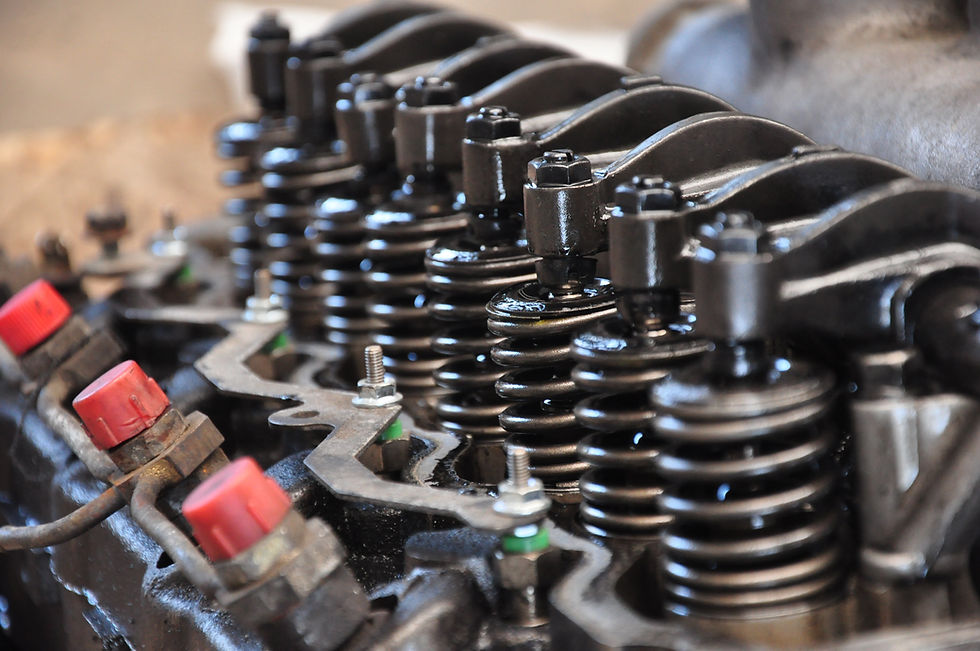
Above the cylinder sits the valve system, which controls how air and fuel enter and how exhaust gases exit. There are two main valves: the intake valve (for letting air-fuel mix in) and the exhaust valve (for letting burnt gases out). These valves open and close at precise times so that the engine runs smoothly. They are controlled by a rotating shaft called the camshaft, which acts like the “timekeeper” of the engine.

Photo credit-www.oozx.co.jp
Another key part is the spark plug, which plays a very important role in gasoline engines. Once the air-fuel mixture is inside the cylinder, the spark plug produces a tiny electric spark that ignites it. This spark is what triggers the controlled explosion that moves the piston. Without it, the fuel would not burn at the right time, and the engine would not run properly.

Photo credit-www.atchinson.net
Finally, all the movement created by the pistons is transferred to the crankshaft. This part converts the up-and-down motion of the pistons into a circular motion, which ultimately turns the wheels of the car. The engine also has supporting systems like the fuel injector (which sprays fuel), the cooling system (which prevents overheating), and the lubrication system (which reduces friction between moving parts).

Engines sound different because they are built in different sizes and work in different ways. A sports car engine makes a high, fast “vroom” sound because it runs very quickly and produces many small explosions in a short time. A truck engine sounds deep and heavy because it is bigger and works more slowly. Motorcycles often sound loud and sharp because their engines are smaller and less covered, so the sound comes out more clearly.
In an engine, these vibrations are created when fuel burns inside the cylinders and pushes different parts very quickly. These rapid movements and tiny explosions create waves in the air, which we hear as engine noise. The faster and stronger the vibrations, the louder and sharper the sound becomes.
In conclusion, an engine may seem complicated at first, but it is actually a simple idea built with many well-organized parts working together. Each part from the pistons that create movement, to the valves that control flow, and the crankshaft that transfers power has a clear and important role. When everything works in perfect timing, fuel is turned into motion that powers our everyday travel.



Comments