
The Pacific Northwest
The Pacific Northwest (PNW) is one of the most beautiful and ecologically diverse regions of North America, stretching along the Pacific coast and including parts of British Columbia (Canada), Washington, and Oregon (US). What makes this region special is the close relationship between its mountains, forests, rivers, lakes, and ocean. British Columbia, in particular, is known for its spectacular landscapes, from the coastal rainforests around Vancouver to the mountains and valleys of the Interior. The region is home to enormous trees such as Douglas-fir, western red cedar, western hemlock, and Sitka spruce. Walking through these forests can feel like entering another world, with moss-covered trunks, ferns, fallen logs, and streams flowing beneath a dense green canopy.
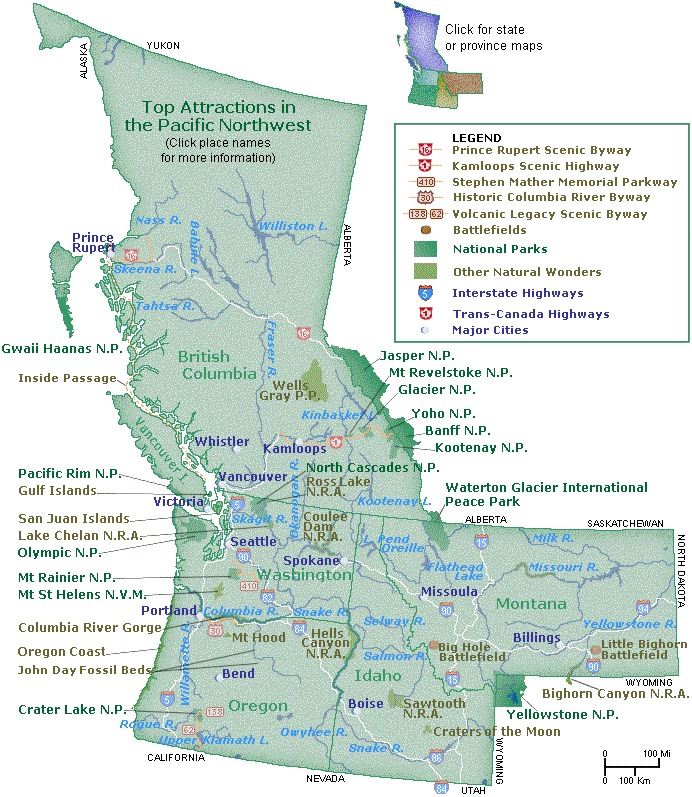
The weather plays a major role in shaping life in the Pacific Northwest. Coastal areas experience a mild, cool, and very wet climate, especially during autumn and winter. Moist air from the Pacific Ocean brings frequent rainfall, while the mountains influence how that moisture is distributed across the region. Summers are generally warmer and considerably drier, although conditions vary greatly between the coast and the Interior. This combination of abundant moisture and moderate temperatures creates ideal conditions for temperate rainforests. In places such as the forests around Vancouver, rain can remain trapped within the ecosystem through streams, damp soil, moss, and vegetation, creating the lush environment that the Pacific Northwest is famous for. The Pacific Northwest is shaped by major rivers such as the Columbia, Fraser, Snake, and Willamette, which provide water and support diverse ecosystems and wildlife.

Photo credit-www.pinterest.com
The region provides an enormous variety of habitats for wildlife. Dense forests provide shelter and food for black bears, black-tailed deer, cougars, wolves, and smaller mammals such as raccoons and squirrels. Rivers and coastal waters support salmon, while the surrounding forests provide nesting and feeding areas for bald eagles, owls, woodpeckers, and many other birds. The ocean is equally important, supporting whales, seals, sea lions, and numerous marine organisms.

Even the smallest spaces are full of life: insects live beneath bark and fallen leaves, spiders build webs among branches, and tiny organisms break down dead wood. Every layer of the ecosystem from the forest floor to the treetops and the nearby ocean provides a different habitat. Some of the major and famous waterfalls of the Pacific Northwest include Multnomah Falls in Oregon, Snoqualmie Falls in Washington, Shannon Falls and Brandywine Falls in British Columbia, and Helmcken Falls in British Columbia.

Photo credit-traveloregon.com
One of the most remarkable features of the Pacific Northwest is the way different forms of life depend on one another. Trees capture sunlight through photosynthesis and provide food, shelter, and nesting sites for countless organisms. Fungi break down dead wood and return nutrients to the soil, while fungi living alongside tree roots can help trees obtain water and minerals. Mosses and ferns thrive in the damp shade, while pollinators such as bees and butterflies move between plants. Salmon are another important part of this ecosystem. After spending part of their lives in the ocean, they return to freshwater rivers to reproduce, connecting marine and terrestrial ecosystems. Their bodies eventually provide nutrients to organisms throughout the surrounding environment.

Photo credit-www.pnt.org
What I find most fascinating about the Pacific Northwest is that it is not simply a collection of beautiful landscapes it is a living ecosystem where everything is connected. The rain nourishes the forests, the forests protect the soil and waterways, the rivers carry nutrients toward the ocean, and wildlife moves between these habitats as part of its life cycle. Even areas affected by wildfires eventually begin a slow process of regeneration, with new plants emerging and wildlife returning. Standing among the enormous trees and listening to the sound of rain, wind, and flowing water makes it easy to understand why this region feels so alive. The Pacific Northwest is a reminder that nature is not made up of separate pieces; it is a constantly changing network of life, climate, water, and land working together. Having lived in the Pacific Northwest, I can truly say that it feels like stepping into an enchanted world.

Until next time, stay safe and happy!


Comments