
The Quechua People
The Quechua people are one of the largest Indigenous groups in South America. They mainly live in the Andes Mountains of Peru, Bolivia, Ecuador, Colombia, Argentina, and Chile. The Quechua are descendants of the ancient Inca civilization and have lived in the Andes for thousands of years. Today, millions of people speak the Quechua language, making it one of the most widely spoken Indigenous languages in the Americas. Although many Quechua people now live in towns and cities, many still live in traditional mountain villages and continue to preserve their culture, language, and customs.

The Quechua people have a unique way of life that is closely connected to the mountains and nature. Most families live in simple homes made from stone, mud bricks (adobe), or wood, with roofs made of straw or tiles. Their villages are often built high in the Andes, where the climate is cool and the land is steep. Farming is an important part of daily life. They grow crops such as potatoes, corn, quinoa, and beans using farming methods that have been passed down for generations. Many families also raise llamas, alpacas, sheep, and guinea pigs, which provide food, wool, and transportation.

Photo credit- alpacajourneys.com
Interesting Fact: The popular hiking brand Quechua (by Decathlon) was named after the Quechua people as a tribute to their ability to live and travel in the Andes Mountains. However, the brand is a French company and is separate from the Indigenous Quechua communities.
The traditional Quechua diet is healthy and based on foods that grow well in the mountains. Potatoes are the most important food, and there are thousands of different varieties grown in the Andes. Other common foods include quinoa, corn, beans, squash, and fresh vegetables. Meat from llamas, alpacas, chickens, and guinea pigs is eaten on special occasions or as part of regular meals in some communities. People also drink herbal teas, such as coca leaf tea, which is traditionally used to help with the effects of high altitude. Meals are simple, nutritious, and made with locally grown ingredients.

The beliefs of the Quechua people combine ancient traditions with Christianity, especially Roman Catholicism, which spread during Spanish colonization. Many Quechua families believe in Pachamama (Mother Earth), who is respected as the provider of life, crops, and protection. They also honour the mountain spirits, known as Apus, believing that these powerful spirits watch over their communities. Traditional ceremonies, music, colourful festivals, and offerings to Pachamama are still practiced in many villages, especially before planting and harvesting crops. These customs reflect the Quechua belief that people should live in harmony with nature.
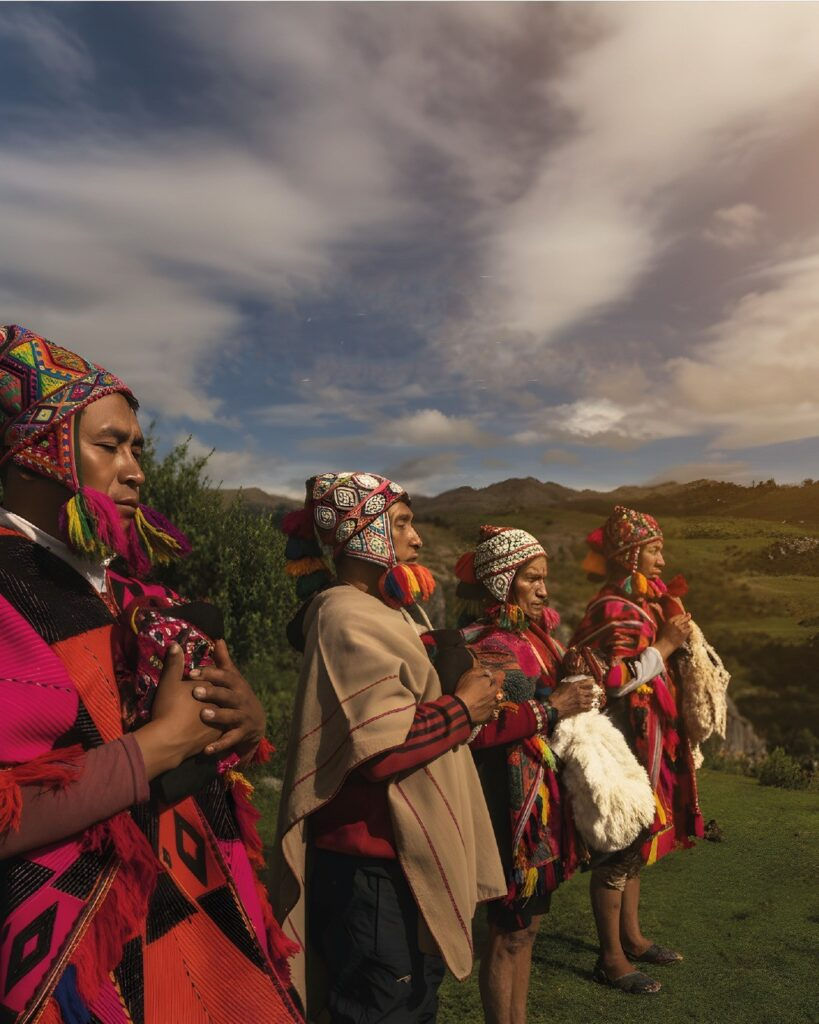
Photo credit-www.peruhike.com
Today, the Quechua people continue to preserve their rich cultural heritage while adapting to modern life. Many wear beautifully woven clothing made from alpaca or sheep wool, featuring colourful patterns that often represent their community or family. Weaving, pottery, music, and dance remain important cultural traditions. Although many Quechua people attend schools, work in cities, and use modern technology, they continue to value their language, traditions, family ties, and respect for nature.
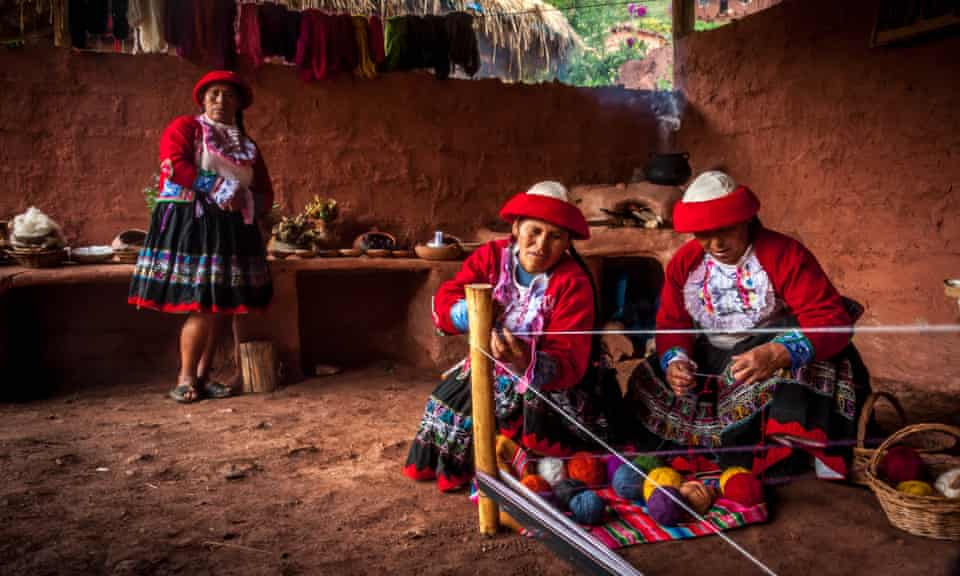
The Quechua people are highly skilled weavers, and weaving has been an important part of their culture for thousands of years. They use wool from alpacas, llamas, and sheep to create clothing, blankets, ponchos, hats, scarves, and bags. Before weaving, they dye the wool using natural colours made from plants, flowers, tree bark, and even insects, such as the cochineal insect, which produces a bright red dye. They weave on simple looms, carefully creating detailed patterns that have special meanings. These designs often represent the Andes Mountains, rivers, animals like llamas, alpacas, and condors, the sun and stars, their village or community, and traditional stories and beliefs. Their beautiful handmade textiles help preserve their culture and are passed down from one generation to the next.
Their history, resilience, and cultural contributions make the Quechua people an important part of South America's identity and a lasting example of how ancient traditions can continue to thrive in the modern world.
Until next time, stay happy and healthy!


Comments